
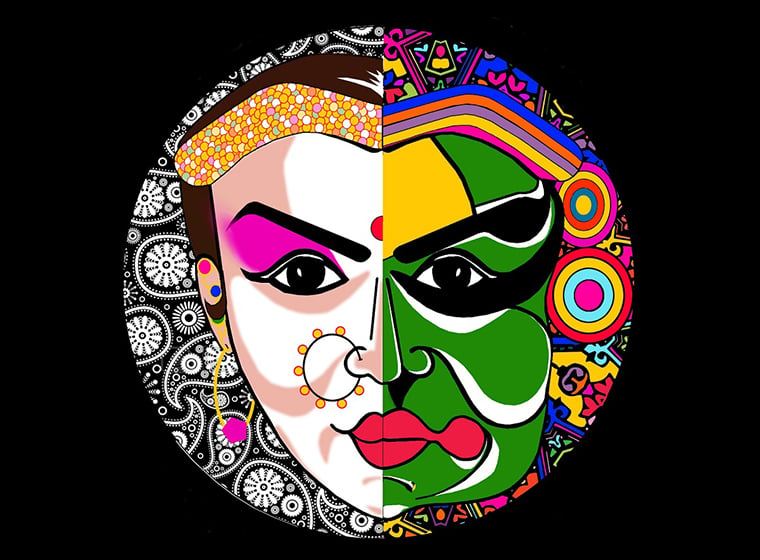
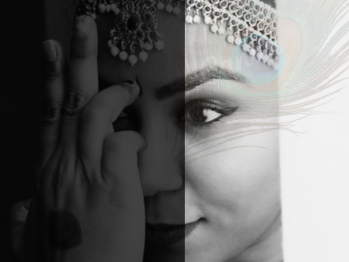
 Performed by Anjali Mohan, this piece is an excerpt from a traditional Bharatanatyam Krishna Varnam. It opens with a contemporary, “thinking out loud” act that reimagines these childhood adventures of Krishna through a modern lens, exploring how the same stories take on vastly different meanings in the adult mind. Ultimately, the piece confronts a deeply personal question: Can I still be called a believer?
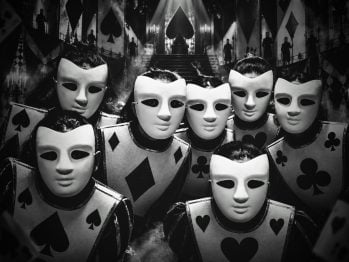 Presented by Inara Ensemble, “The Fall of the House of Cards” is a bold, political adaptation of Rabindranath Tagore’s Tasher Desh, mirroring today’s world. It depicts a rigid society where blind obedience is enforced.From Sri Lanka’s Aragalaya and Bangladesh’s July Uprising to student-led movements across India, Pakistan, and Nepal, a new generation refuses to accept silence. This performance honours their defiant spirit, a world where rules become cages and questioning becomes rebellion.Musically, Tagore’s compositions collide with war soundscapes, protest poetry, and fractured rhythms to create a haunting, confrontational atmosphere. The cards are dealt. The rules are fixed. Until someone refuses to play.
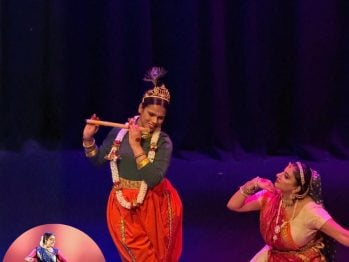
“Baaji Ri Bansi” explores what happens when two separate beings unite to find a collective voice. Tracing the journey of two humble sticks transforming into Krishna’s divine flute, the performance moves from union to separation, chaos to oneness.
In the ecstatic Raas Leela, Radha and Krishna’s eternal bond unfolds. Yet, union brings separation—Viraha emerges as Radha longs amidst the monsoon. When beauty turns to turbulence, the divine within transforms chaos into protection.
Ultimately, the sticks fulfil their destiny, becoming a hollow yet complete flute. When the self-empties, the Divine speaks. This is the eternal music of Krishna.
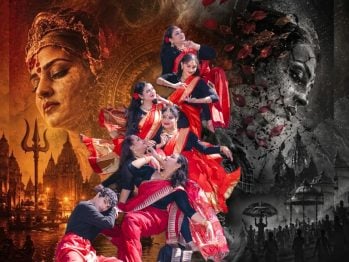 “Sraddha to Sunya: From Faith to Void,” presented by Essentra, is an original mytho-ritual dance theatre production in the Rasavikriti genre. Blending Indian classical dance, Natyashastra principles, and folk traditions, it reimagines the journey of the deity Renuka–Yellamma as a Natyadharmi abstraction.
The work explores Vikriti (distortion) as choreographic unison fractures into asynchronous fragments, creating a kinetic metaphor for the transition from sincere devotion to mechanical ritual. At its core, the performance reflects on how ritual without emotion becomes empty. It powerfully questions whether we still connect with the divine, or if we have simply become devoted to the ritual itself.